Request a Catalog



America’s Architectural Journey
Tracing Key Styles and the Role of Shutters in Each Era
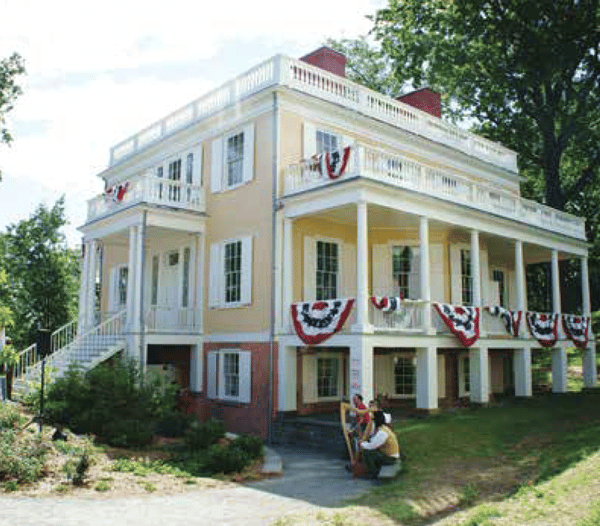
As we continue our America 250 series, we turn from the broader story of craftsmanship to the architectural styles that shaped the nation. Each era brought distinct design ideals—and exterior shutters evolved alongside them, serving both practical and aesthetic purposes.
The Georgian Period (1714–1830)
Georgian architecture dominated the English colonies, particularly before 1780, in eastern coastal cities. The name comes from the four British monarchs named “George” from 1714-1830. Identifying architectural features include a centered paneled front door with an elaborate decorative entablature supported by pilasters. Georgian houses are typically two-story rectangular forms, two rooms deep, with a hipped roof and symmetrical doors and windows.
In the northern colonies, wood-frame construction with shingles or clapboard siding and a central chimney prevailed. In the middle and southern colonies, brick was the dominant building material. Tooth-like dentil moldings, double-hung windows, and small-pane divided-light glass are also characteristic features.
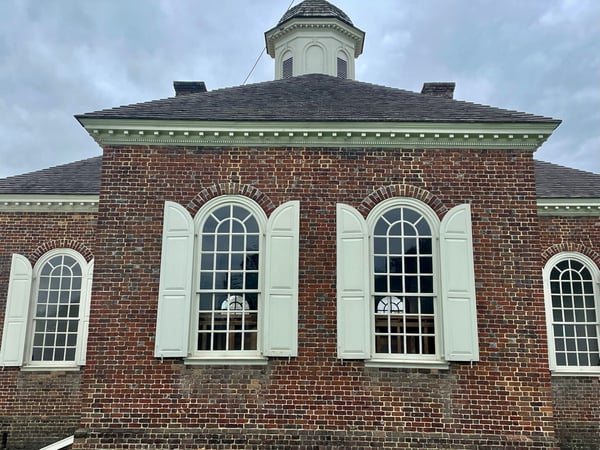
A Colonial era building with elliptical shutters flanking Palladian windows
Georgian House Shutters
These were the homes of the affluent—handsome and highly visible from the street. They had curb appeal. Exterior shutters were therefore both functional and decorative. Understanding the details of each is essential for achieving historical accuracy and authenticity on Georgian homes.
Raised Panel Shutters
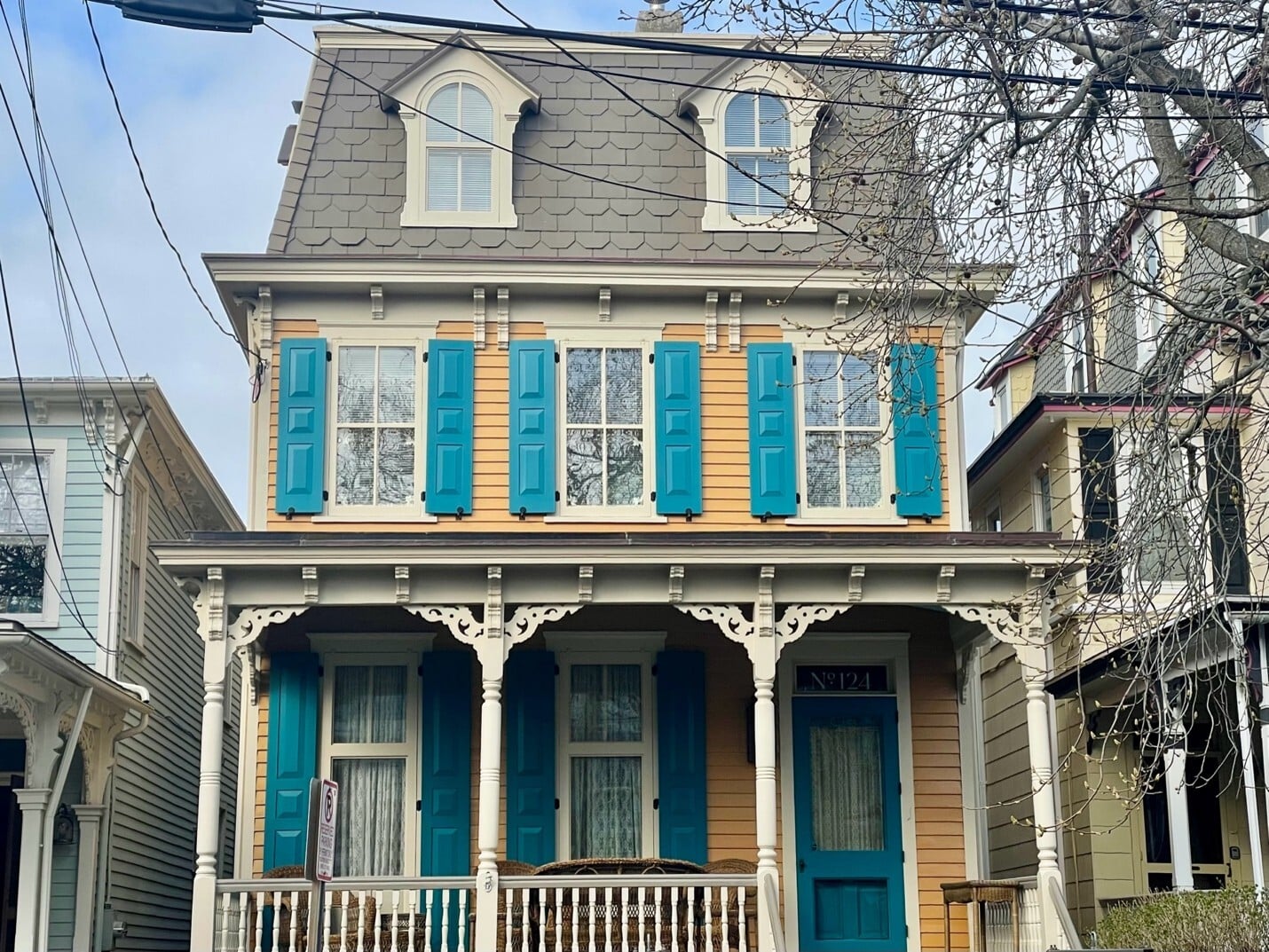
A beautiful example of decorative raised panel shutters can be found on Elfreth’s Alley— Philadelphia’s oldest continuously inhabited residential street—where Georgian houses were built between 1720 and 1836. Their colorful raised panel shutters are a defining architectural feature.
Raised panel shutters typically feature two vertical panels per shutter, often with a smaller third panel at the top.
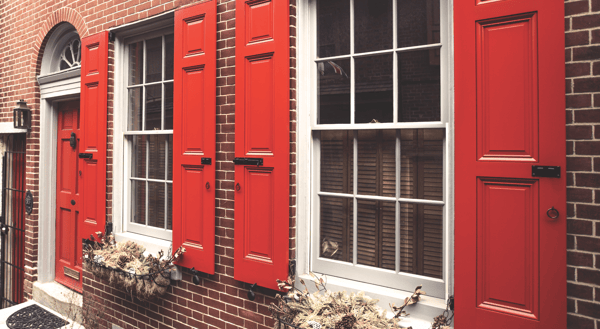
Because these early Georgian homes on Elfreth’s Alley were built nearly flush with the brick sidewalk and cobblestone alley, shutters served important security and privacy functions in addition to their decorative appeal. Historically accurate shutters are always operable. When closed for security, privacy, or inclement weather, they cover the full width of the window and latch from the inside. When open, they sit flush against the house and are secured with decorative hardware.
Georgian Shutter Hardware
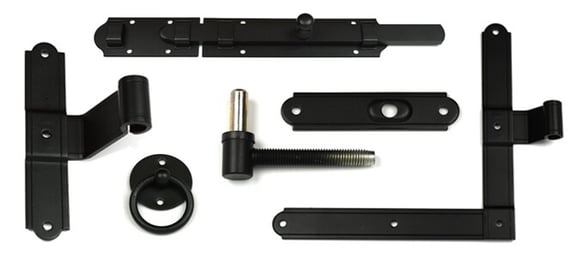
Like the shutters themselves, hardware can be both functional and decorative. Mounting hardware for operable shutters includes hinges and pintles, allowing the shutters to open and close properly. When open, historic shutters are secured with tiebacks—often formed in prominent S-curves or decorative floral patterns forged in iron.
FEDERAL HOUSES 1780-1820
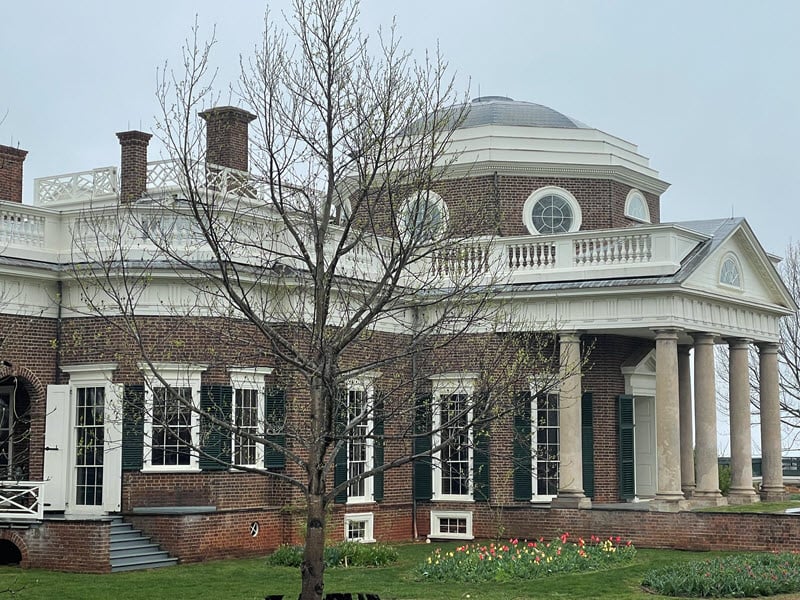
The Federal period began after the ratification of the U.S Constitution, during the time George Washington and John Adams were presidents. The term is derived from the word “Federalist,” a political party championed by Alexander Hamilton which believed in a strong national government, a national bank and close economic ties with Britian. Federal architecture was Roman-inspired, refined, decorative and symmetrical.
Like Georgian houses, the Federal house is a simple box, two rooms deep with doors and windows arranged symmetrically. One common difference between Georgian and Federal houses is that the latter has projecting wings, one on each side of the central “box.” Windows are six- over- six small panes double hung, usually five across, all the same size. These windows are topped with a decorative frieze.
Palladian windows are common in Federal houses as are the side-gabled roofs. The front door has an elaborate surround, a semi-circular elliptical fanlight often with a crown and a cornice emphasized with decorative molding.
Federal houses are common in coastal seaports like Salem Massachusetts, Annapolis Maryland and Alexandria Virginia, cities who actively traded with the British. The Lloyed house in Alexandria, the Colton House, attributed to Asher Benjamin in Longmeadow MA and the William House in Savannah are excellent examples of the Federal style which have exterior shutters on both the first and second story.
FEDERAL HOUSE SHUTTERS
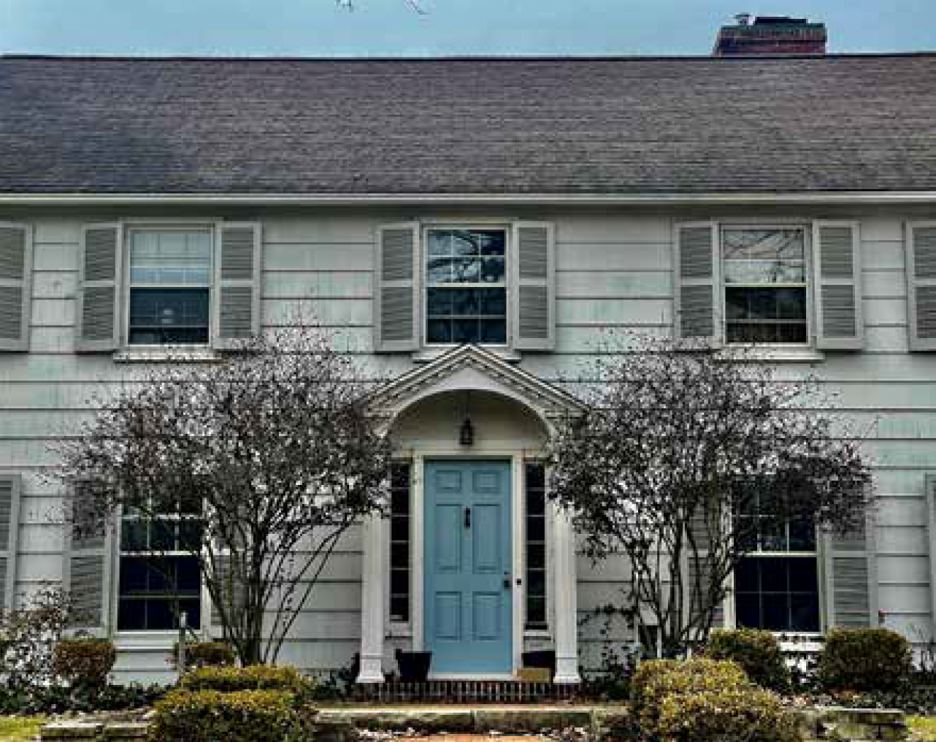
Louvered shutters (horizontal slats) are the most common shutters on Federal homes. They allow for ventilation, are lighter than raise panel shutters but similarly sized to properly cover the window when closed. Like the windows they adorn, these louvered shutters are classically symmetrical across the fade and tailored, not rustic, refined and elegant. They can be painted any color but in the Federal period were usually painted black, dark green or navy blue.
FEDERAL HOUSE SHUTTER HARDWARE
Exterior shutters of the Federal style used hand-forged black wrought-iron straps which reach across the front on the top and bottom rails and pivot on hinges which are attached to the window frame. A taller shutter will have three straps on the top, middle and bottom rails.
While choosing decorative hardware is a matter of personal taste, Federal shutter hardware, in keeping with the architecture, would have been thinner, simpler and refined. Shutters can be held firm while open by hooks (on the back) with an eyelet on the window frame, or, like Georgian raised panel shutters, can be held using the visible S shape which rotates up and down to either release or secure the shutter to the wall. A hook and eye can hold the shutter firm from the inside too, when closed for inclement weather or for privacy.
Whether choosing shutter hardware for Georgian or Federal period homes, it’s important to couple the right hardware with the right shutter and to get the proportions right. The quality of hardware, be it the hinges, locks, pintels, pull rings or tiebacks, should be commensurate with the quality, detailing and historical authenticity of the shutter. Hand-forged iron was the material of the 1700 and 1800s. Today replicas of historic hardware can be made of steel, stainless steel aluminum and plastic.
Historic district neighborhoods might have guidelines to follow for choosing the appropriate shutter hardware, whether mounting hardware, functional or decorative hardware. Timberlane has the experience to help you choose shutters and shutter hardware, appropriately.