Request a Catalog



Between 1880 and 1940, American residential architecture entered a richly eclectic period shaped by a wide range of influences, including English, French, Italian, and Spanish traditions. By this time, European-trained architects were actively practicing in the United States, and advances in photography allowed clients to explore a broad variety of historic house types.
Colonial Revival and Neoclassical styles were particularly popular during the late nineteenth and early twentieth centuries. The Philadelphia Centennial Exposition of 1876 is widely credited with awakening interest in America’s colonial architectural heritage, while renowned architects McKim, Mead & White helped popularize the Colonial Revival style beginning in the late 1880s.
The World’s Columbian Exposition of 1893 in Chicago further influenced architectural trends by showcasing Neoclassical design on a grand scale. Later, World War I veterans returning home brought with them an appreciation for classical European architecture. Alongside these dominant styles, Tudor, French Château, Beaux Arts, Italian Renaissance, and Spanish Revival houses also flourished. However, beginning around 1910 and continuing through 1930, distinctly American architectural expressions took hold, championed by architects such as Frank Lloyd Wright. During this period, the Prairie and Craftsman styles, particularly the latter, came to dominate.
Colonial Revival
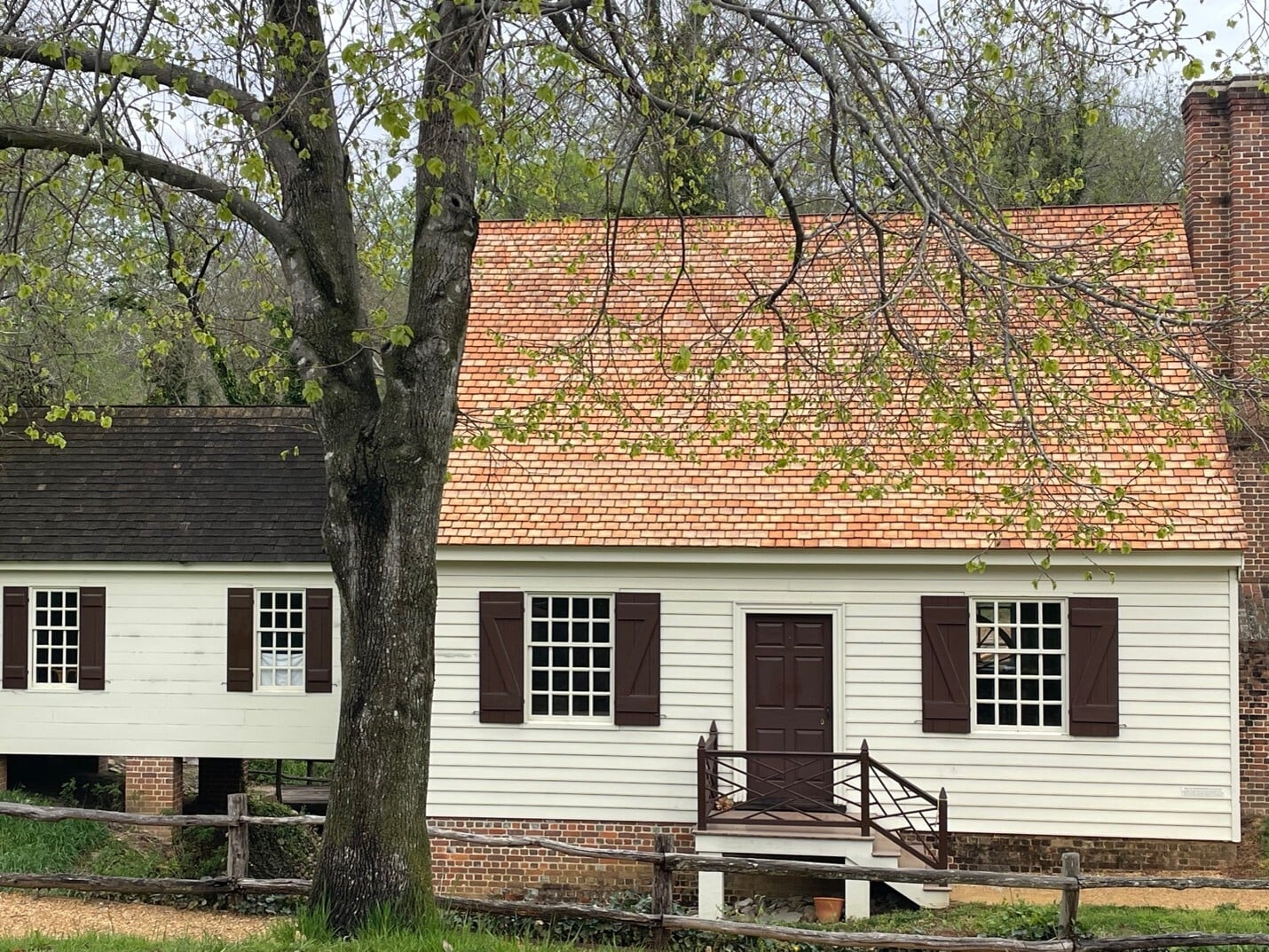
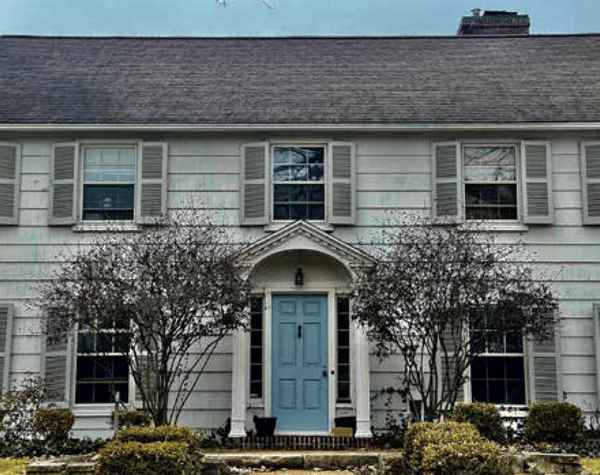
Exterior shutters were most commonly used on Colonial Revival and Neoclassical houses, reflecting their earlier use on eighteenth-century Colonial and Federal houses. Colonial Revival houses are defined by their symmetry and classical detailing. Elaborate front doors are typically framed by pediments supported by pilasters, and entry porches are often articulated with columns. Hip roofs with decorative friezes and dormers further reinforce the style’s formal composition.
Windows are generally arranged in a balanced, symmetrical pattern flanking a central front door. These are most often double-hung sash windows, frequently paired and featuring multi-pane glazing. In more historically accurate interpretations of Georgian or Federal precedents, windows tend to stand alone rather than in pairs. Tall rectangular windows are commonly accented with prominent exterior shutters.
The prominence of Colonial Revival houses was further enhanced by the widespread use of brick and masonry, made more affordable through machine-made materials and stone veneers. Exterior shutters were especially prevalent on high-style houses where curb appeal was a priority. Regional variation influenced shutter design, with paneled shutters more common in the Mid-Atlantic and louvered designs favored in the South.
By the early twentieth century, the functional role of shutters in climate control and protection had diminished with the introduction of electric lighting and mechanical ventilation. However, their visual importance increased, serving as symbols of refinement and historical continuity during a prosperous era.
Neoclassical
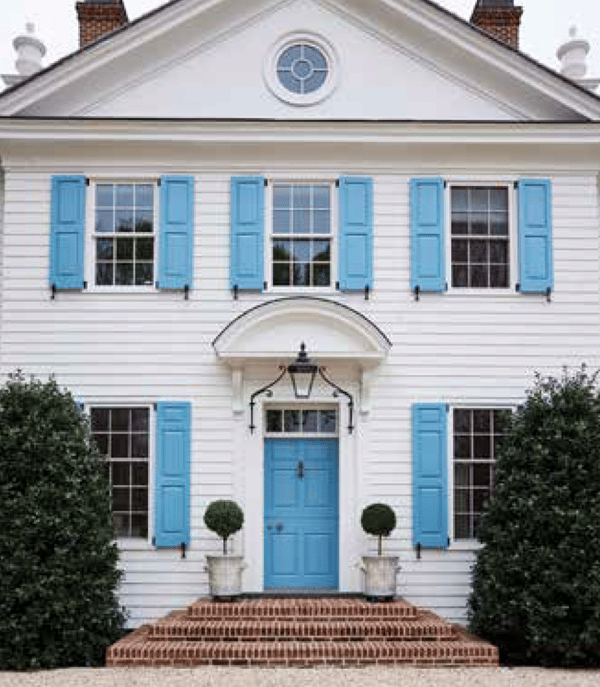
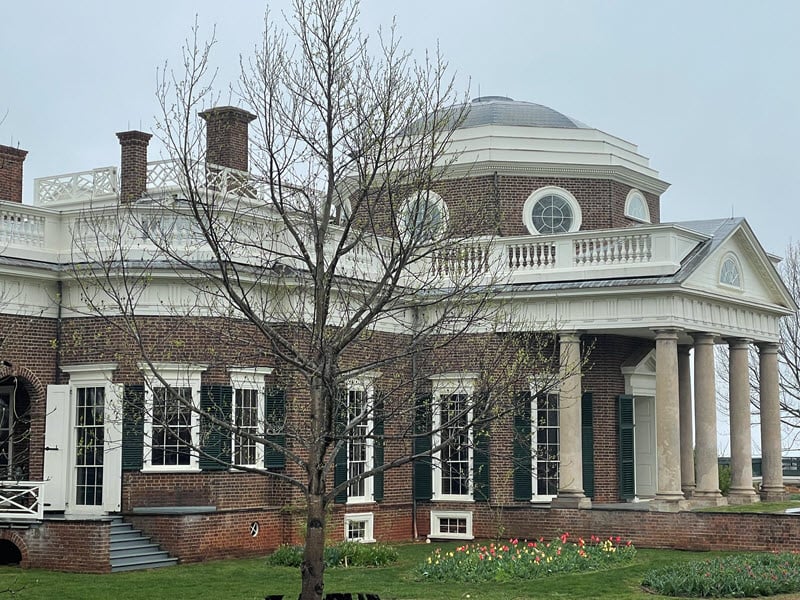
This new Neoclassical house is of Georgian descent
The most obvious distinction between Colonial Revival and Neoclassical houses lies in the treatment of the façade. Neoclassical houses often feature a commanding full-height porch supported by Ionic or Corinthian columns, creating a strong sense of monumentality. Roofline balustrades are also common, contributing to the classical vocabulary.
The façade is typically symmetrical, with a central entrance balanced by evenly spaced windows. These windows are often tall, especially on the ground floor, and may appear in pairs or triplets, sometimes incorporating bay or arched forms. Fanlights and decorative surrounds further emphasize the front door.
Porches may extend across a large portion of the façade, though they do not always span its full width. The tall windows characteristic of this style were commonly flanked by proportionally sized exterior shutters designed to fully cover the openings, even if used only occasionally.
While Colonial Revival reached peak popularity between roughly 1880 and 1900, Neoclassical architecture flourished in the early twentieth century. Like the Victorian styles before them, these houses were made possible by advances in industrial-age manufacturing and transportation, as well as the widespread influence of plan books and architectural magazines.
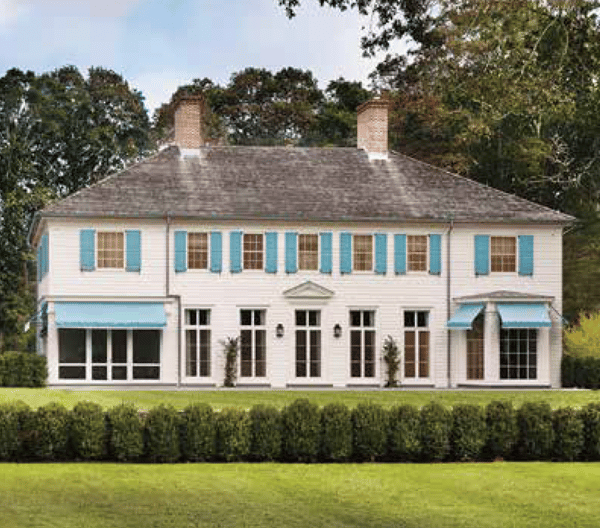
Neoclassical or New Georgian House
Craftsman
The popularity of highly ornamental classical styles eventually gave way to the more organic ideals of the Arts and Crafts movement and its American expression, the Craftsman style of the early twentieth century. This shift reflected a broader cultural movement toward simplicity, natural materials, and hand craftsmanship.
The Craftsman bungalow is the most recognizable form of this style. It is typically defined by a low-pitched gabled roof, wide overhanging eaves, exposed rafters, and a welcoming front porch supported by tapered square columns. These homes are usually one to one-and-a-half stories in height and often include a central dormer.
Southern California’s temperate climate helped popularize the Craftsman emphasis on indoor-outdoor living. Architects Charles and Henry Greene designed influential bungalow homes in Pasadena between the 1890s and 1910s, gaining national attention through publications such as House Beautiful and Ladies’ Home Journal. Although California examples are particularly well known, the Craftsman style spread rapidly across the United States in the early 1900s.
Craftsman architecture blends influences from the English Arts and Crafts movement, championed by William Morris, with elements of Japanese and broader Asian design. The style emphasizes handcrafted materials, especially wood, and fosters a close relationship with nature—values that closely align with Timberlane’s approach to shutter craftsmanship.
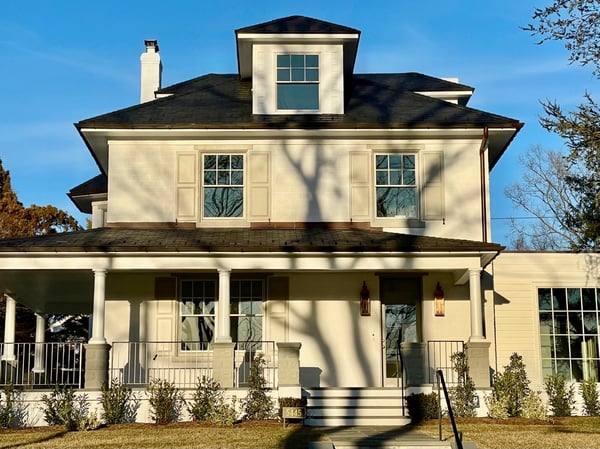
American Foursquare
A two-story variation of the Craftsman style, the American Foursquare is defined by its simple, box-like form and efficient layout. It typically features a hip roof with a central dormer and a full-width front porch. The interior is organized into a practical four-room layout on each floor, reflecting the home’s name and straightforward design philosophy.
The front door may be centered or offset, and windows are generally double-hung with one-over-one glazing. Historically, these homes were equipped with operable, well-proportioned exterior shutters that complemented both their function and appearance.
Over time, particularly since the 1920s, many American Foursquare houses have been altered in ways that compromise their original character. In many cases, double-hung windows have been replaced with casement units, and the accompanying shutters have been removed. These changes result in the loss of both functional performance and architectural integrity.